
Showing posts with label HISTORY. Show all posts

Wednesday, June 5, 2019

Inspirations Digital

ORIGIN OF HONDA

ORIGIN OF HONDA

Honda has been the world's biggest bike maker since 1959, just as the world's biggest producer of inner ignition motors estimated by volume, creating in excess of 14 million inside burning motors every year. Honda turned into the second-biggest Japanese vehicle maker in 2001. Honda was the eighth biggest car producer on the planet behind Toyota, Volkswagen Gathering, Hyundai Engine Gathering, General Engines, Passage, Nissan, and Fiat Chrysler Cars in 2015.

Honda was the principal Japanese vehicle maker to discharge a devoted extravagance brand, Acura, in 1986. Beside their center car and cruiser organizations, Honda additionally makes garden hardware, marine motors, individual watercraft and power generators, and different items. Since 1986, Honda has been included with man-made reasoning/mechanical technology investigate and discharged their ASIMO robot in 2000. They have additionally wandered into aviation with the foundation of GE Honda Air Motors in 2004 and the Honda HA-420 HondaJet, which started generation in 2012. Honda has three joint-adventures in China (Honda China, Dongfeng Honda, and Guangqi Honda).

In 2013, Honda contributed about 5.7% (US$6.8 billion) of its incomes in innovative work. Additionally in 2013, Honda turned into the main Japanese automaker to be a net exporter from the US, trading 108,705 Honda and Acura models, while bringing in just 88,357.
HISTORY
For an amazing duration, Honda's originator, Soichiro Honda, had an enthusiasm for autos. He functioned as a repairman at the Workmanship Shokai carport, where he tuned vehicles and entered them in races. In 1937, with financing from his colleague Kato Shichirō, Honda established Tōkai Seiki (Eastern Ocean Exactness Machine Organization) to make cylinder rings working out of the Craftsmanship Shokai carport. After starting disappointments, Tōkai Seiki won an agreement to supply cylinder rings to Toyota, yet lost the agreement because of the low quality of their items. Subsequent to going to building school without graduating, and visiting plants around Japan to all the more likely comprehend Toyota's quality control forms, by 1941 Honda had the option to mass-produce cylinder rings satisfactory to Toyota, utilizing a robotized procedure that could utilize even incompetent wartime workers.

Tōkai Seiki was set leveled out of the Service of Business and Industry (called the Service of Weapons after 1943) toward the beginning of World War II, and Soichiro Honda was downgraded from president to senior overseeing executive after Toyota took a 40% stake in the organization. Honda likewise supported the war exertion by helping different organizations in computerizing the generation of military air ship propellers. The connections Honda developed with work force at Toyota, Nakajima Air ship Organization and the Majestic Japanese Naval force would be instrumental in the after war time frame. A US B-29 aircraft assault crushed Tōkai Seiki's Yamashita plant in 1944, and the Itawa plant crumbled in the 13 January 1945 Mikawa quake. Soichiro Honda sold the salvageable survives from the organization to Toyota after the war for ¥450,000, and utilized the returns to establish the Honda Specialized Exploration Foundation in October 1946.
With a staff of 12 men working in a 16 m2 (170 sq ft) shack, they assembled and sold ad libbed mechanized bikes, utilizing a supply of 500 two-stroke 50 cc Tohatsu war surplus radio generator motors. At the point when the motors ran out, Honda started fabricating their very own duplicate of the Tohatsu motor, and providing these to clients to connect to their bikes. This was the Honda A-Type, nicknamed the Bata for the sound the motor made. In 1949, the Honda Specialized Exploration Organization was sold for ¥1,000,000, or about US$5,000 today; these assets were utilized to join Honda Engine Co., Ltd. At about a similar time Honda procured engineer Kihachiro Kawashima, and Takeo Fujisawa who gave crucial business and promoting aptitude to supplement Soichiro Honda's specialized bowed. The nearby association between Soichiro Honda and Fujisawa went on until they ventured down together in October 1973.

The primary complete bike, with both the edge and motor made by Honda, was the 1949 D-Type, the first Honda to pass by the name Dream. Honda Engine Organization developed in a brief span to turn into the world's biggest maker of cruisers by 1964.(citation required)

The main creation vehicle from Honda was the T360 smaller than usual get truck, which went at a bargain in August 1963. Fueled by a little 356-cc straight-4 gas motor, it was characterized under the less expensive Kei vehicle charge bracket.[16] The main generation vehicle from Honda was the S500 sports vehicle, which pursued the T360 into creation in October 1963. Its chain-driven back wheels indicated Honda's bike inceptions.

Throughout the following couple of decades, Honda attempted to extend its product offering and extended activities and fares to various nations around the globe. In 1986, Honda acquainted the fruitful Acura brand with the American market trying to make progress in the extravagance vehicle advertise. The year 1991 saw the presentation of the Honda NSX supercar, the primary all-aluminum monocoque vehicle that fused a mid-motor V6 with variable-valve timing.
President Tadashi Kume was prevailing by Nobuhiko Kawamoto in 1990. Kawamoto was chosen over Shoichiro Irimajiri, who managed the effective foundation of Honda of America Assembling, Inc. in Marysville, Ohio. Both Kawamoto and Irimajiri shared a cordial competition inside Honda, and Irimajiri would leave in 1992 because of medical problems.

Following the demise of Soichiro Honda and the takeoff of Irimajiri, Honda wound up rapidly being outpaced in item improvement by other Japanese automakers and was found napping by the truck and game utility vehicle blast of the 1990s, all which negatively affected the productivity of the organization. Japanese media announced in 1992 and 1993 that Honda was at genuine danger of an undesirable and antagonistic takeover by Mitsubishi Engines, who at the time was a bigger automaker by volume and flush with benefits from their effective Pajero and Diamante.

Kawamoto acted rapidly to change Honda's corporate culture, hurrying through market-driven item improvement that brought about recreational vehicles, for example, the original Odyssey and the CR-V, and a refocusing far from a portion of the various cars and cars that were well known with Honda's architects however not with the purchasing open. The most stunning change to Honda came when Kawamoto finished Honda's fruitful investment in Recipe One after the 1992 season, refering to costs in light of the takeover risk from Mitsubishi just as the longing to make an all the more earth agreeable organization picture.

Afterward, 1995 offered ascend to the Honda Flying machine Organization with the objective of creating plane air ship under Honda's name.

On 23 February 2015, Honda reported that Chief and President Takanobu Ito would venture down and be supplanted by Takahiro Hachigo by June; extra retirements by ranking directors and executives were normal.
Read More

Monday, June 3, 2019

Inspirations Digital

ORIGIN OF SOICHIRO HONDA

ORIGIN OF SOICHIRO HONDA

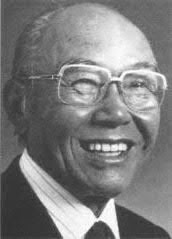
Soichiro Honda (本田 宗一郎 Honda Sōichirō, November 17, 1906 – August 5, 1991) was a Japanese engineer and industrialist. In 1948, he established Honda Motor Co., Ltd. and oversaw its expansion from a wooden shack manufacturing bicycle motors to a multinational automobile and motorcycle manufacturer.

Early Years
Honda was born in Tenryū, Shizuoka, a small village under Mount Fuji near Hamamatsu on November 17, 1906. He spent his early childhood helping his father, Gihei, a blacksmith, with his bicycle repair business. At the time his mother, Mika, was a weaver. Honda was not interested in traditional education. His school handed grade reports to the children, but required that they be returned stamped with the family seal, to make sure that a parent had seen it. Soichiro created a stamp to forge his family seal out of a used rubber bicycle pedal cover. The fraud was soon discovered when Honda started to make forged stamps for other children. Honda was unaware that the stamp was supposed to be mirror-imaged. His family name 本田 was symmetrical when written vertically, so it did not cause a problem, but some of other children's family names were not.

Indeed, even as a little child, Honda had been excited by the primary vehicle that was ever found in his town, and frequently used to state in later life that he would always remember the smell of oil it emitted. Soichiro once obtained one of his dad's bikes to see an exhibition of a plane made by pilot Craftsmanship Smith, which solidified his affection for hardware and creation.

At 15, with no formal training, Honda left home and went to Tokyo to search for work. He acquired an apprenticeship at a carport in 1922, and after some wavering over his work, he remained for a long time, filling in as a grease monkey before returning home to begin his own auto fix business in 1928 at 22 years old.
Honda raced a turbocharged Ford in the "1st Japan Automobile Race" at Tamagawa Speedway in 1936. He crashed and seriously injured his left eye. His brother was also injured. After that, he quit racing.

Development of Honda Motor Co., Ltd.
In 1937, Honda founded Tōkai Seiki to produce piston rings for Toyota. During World War II, a US B-29 bomber attack destroyed Tōkai Seiki's Yamashita plant in 1944 and the Iwata plant collapsed in the 1945 Mikawa earthquake. After the war, Honda sold the salvageable remains of the company to Toyota for ¥450,000 and used the proceeds to found the Honda Technical Research Institute in October 1946.[7][8] In 1948 he started producing a complete motorized bicycle, the Type A, which was driven by the first mass-produced engine designed by Honda, and was sold until 1951. The Type D in 1949 was a true motorcycle with a pressed-steel frame designed and produced by Honda and with a 2-stroke, 98 cc (6.0 cu in) 3 hp (2.2 kW) engine, and became the very first model in the Dream series of motorcycles. The Society of Automotive Engineers of Japan (in Japanese) lists both the Type A and the Type D models as two of their 240 Landmarks of Japanese Automotive Technology.

As leader of the Honda Engine Organization, Soichiro Honda transformed the organization into a billion-dollar global that created the top of the line bikes on the planet. Honda's building and promoting abilities brought about Honda cruisers surpassing Triumph and Harley-Davidson in their particular home markets. The following year, Honda was reacquainted with Takeo Fujisawa, whom he knew during his days as a provider of cylinder rings to Nakajima Air ship Organization. Honda enlisted Fujisawa, who directed the money related side of the organization and helped the firm grow. In 1959, Honda Cruisers opened its first vendor in the US.
Honda remained president until his retirement in 1973, where he stayed on as director and was appointed "supreme advisor" in 1983. His status was such that People magazine placed him on their "25 Most Intriguing People of the Year" list for 1980, dubbing him "the Japanese Henry Ford." In retirement, Honda busied himself with work connected with the Honda Foundation.

Last Years
Indeed, even at his propelled age, Soichiro and his better half Sachi both held private pilot's licenses. He additionally delighted in skiing, hang-skimming and swelling at 77, and he was a very cultivated craftsman. He and Takeo Fujisawa made a settlement never to compel their very own children to join the organization. His child, Hirotoshi Honda, was the author and previous Chief of Mugen Motorsports, a tuner for Honda vehicles who additionally made unique hustling vehicles.

ASME built up the Soichiro Honda Award in acknowledgment of Mr. Honda's accomplishments in 1982; this award perceives remarkable accomplishment or noteworthy building commitments in the field of individual transportation. In 1989, he was accepted into the Car Lobby of Distinction close Detroit. Soichiro Honda passed on August 5, 1991 of liver disappointment. He was after death selected to the senior third position in the request of priority and designated a Great Cordon of the Request of the Rising Sun.
Read More

Saturday, January 27, 2018

Inspirations Digital

ALL ABOUT SATELLITE PHONES

ALL ABOUT SATELLITE PHONES

A satellite telephone is nothing but a type of cell phone that, unlike any conventional mobile phone, provides service almost anywhere. It's usually more expensive than cell phones as they provide an important capability of receiving and making telephone calls at any time and from anywhere, independent of a local cell phone service or geographical boundaries.

Identification
A satellite telephone connects to a satellite in orbit for achieving communication. This is different from a conventional mobile phone that connects to a local and land based service tower. Though cell phone networks use satellites for achieving a larger communication radius, mobile phones don't directly dial to these satellites.

Features
Several satellite telephone networks use an interconnected network of satellites in the geosynchronous orbit that enables the network to attain global coverage with only three to four satellites. The other method of satellite telephone communication is to place the satellites in the low earth orbit. This, however, requires more number of satellites for achieving global coverage. They can be smaller nevertheless for reducing launch costs.

Effects
The microwave transceiver of a satellite phone gives notoriously poor service indoors. In this regard, their reliability and performance is worse than a cell phone. Moreover, the networks that depend upon geosynchronous satellites usually suffer from a transmission delay of over a second. This is because satellites are positioned at about 23,000 miles in space. This means that every signal has to travel approximately 46,000 miles from one handset to the other. Besides, a satellite phone handset is more expensive than a mobile phone. In fact, both the handset and the service are priced much higher than conventional cell phones. Calling satellite phones from landlines or mobile phones is also very expensive although this hardly costs anything to the satellite phone owner. Satellite phones, however, should be the preferred device if you want reliable communication in remote areas where cell phone networks are weak.

Considerations
A satellite phone is usually assigned its own special country code. For instance, Inmarsat phones are typically assigned the country codes between 870 and 874, while Iridium phones use the country codes 8816 and 8817.

History
The first satellite phone company of the world commenced its services in 1979, by the name of International Mobile Satellite Organization, a non-profit international body started by the United Nations. The service was started to provide a reliable channel for communication to the maritime community. From the very beginning, the organization was christened as Inmarsat which became a private company from 1999.

Warning
A notable problem with most satellite phones is that unlike cell phones, their networks usually operate near their full capacity even under normal circumstances. The networks usually don't have any extra capacity to accommodate more number of calls simultaneously. This means that any spike in the volume of calls, as has been the case during major regional and international disturbances, can cause a satellite phone network to collapse. Technological advancements, however, are being carried out so that satellite phone networks can get rid of these problems.
Read More

Monday, January 8, 2018

Inspirations Digital

MERCEDEZ BENZ S CLASS

The Mercedes Benz S Class, formerly known as Sonderklasse (German for "special class", abbreviated as "S-Klasse"), is a series of luxury flagship vehicles produced by the German automaker Mercedes Benz, a division of German company Daimler AG. The S-Class designation for top-of-the-line Mercedes Benz models was officially introduced in 1972 with the W116, and has remained in use ever since.

MERCEDEZ BENZ S CLASS


Features:
Rear Defogger/Wash Wipe
Yes

Tachometer
Yes

Trip Computer (MFD)
Yes

Power Windows
Yes

Steering Adjust (Rake/Reach) Yes

Aircon/Climate Control
Climate Control
Rear Aircon
Yes

Wheels (Steel/Alloy)
Alloy
Central/Remote Locking
Yes

MP3/AUX/USB
Yes

Sunroof
Yes

Steering Controls
Yes

First generation (1972-1980) :
In 1972, Mercedes-Benz introduced the W116 line, the first to be officially called the S-Class. Produced from 1972 through 1980, the W116 series featured a four-wheel independent suspension and disc brakes. The 280, 350, and 450 (4.5L version) models featured SE and SEL versions. Production of the W116 totaled 473,035 units. This was a groundbreaking sedan for Mercedes Benz, and for the first time in the company history, the car had an obvious, blatant and outward emphasis on safety placed above a pure styling viewpoint. The overall design incorporated numerous safety features developed from the "safety research vehicles" in the mid-to-late 1960s to the very early 1970s.

Second generation W126 (1979-1991) :
The W126 series premiered in late 1979 as an 1980 model, and in March 1980 as an 1981 model in the US and Australia replacing the W116 line. The W126 line featured improved aerodynamics and enlarged aluminum engine blocks. In Australia in 1981, the W126 S Class won Wheels magazine's Car of the Year award. The W126 was manufactured from 1979 through 1991 with a mid cycle update. Coupé models based on the S Class were reintroduced with the W126 (380/500 SEC). Total sales of the W126 S Class sedans reached 818,036 units, with an additional 74,060 coupes sold.

In 1981, the W126 introduced a driver side airbag, as patented by Mercedes Benz in 1971, as well as the passenger side airbags (in 1988), seat belt pretensioners, and traction control. It was the first production car to feature an airbag standard, and as late as 1991 there were only a few other manufacturers in Europe who offered an airbag.

Third generation W140/C140 (1991-1998) :
The W140 cost 25% more than the W126. It replaced and featured double-pane window glazing, self closing boot lid and doors, electric windows with a jam-protection feature (lowering when encountering an obstruction), rear parking markers in the US (which appeared on the rear wings when in reverse), and a heating system which emitted warm air while residual energy was available after the engine was turned off.

Fourth generation W220 (1998-2005) :
As with each new S Class, the W220 brought in innovations such as Airmatic air suspension and Active Ventilated Seats (which used miniature fans in the seats to move air through perforations). A navigation system with center console mounted screen display was introduced, along with the COMAND input control system. Other options included keyless entry and ignition, a radar controlled Distronic cruise control system and a cylinder shut off system called Active Cylinder Control. The 4 MATIC all wheel drive system was introduced to the North America market S Class for 2003, complementing the traditional rear-wheel drive configurations.

Fifth generation W221 (2005-2013) :
The all new W221 was introduced in the autumn of 2005 at the Frankfurt International Motor Show, with sales starting in autumn of 2005 and export to other markets beginning in 2006. The W221 S-Class made its North American premiere at the 2006 North American International Auto Show in January. The W221 is slightly larger in all dimensions than its predecessor, and it features three newly developed engines with up to 26% power increase. The interior is completely new, all materials have been upgraded and make for a more luxurious ride, and the center console transmission gear lever has been replaced with a column-mounted shifter. New technological features on the W221 include an infrared Night View Assist feature and the latest Mercedes Benz pre collision system. The W221 features sharper exterior styling (most notably wide fender arcs) and technological improvements. The W221 is the second consecutive generation of the S Class to be solely produced in a sedan body style.

A special armored version of the Mercedes Benz S Class has been produced, known as the S guard. Features include the capability to withstand small arms fire and certain explosive devices, a self sealing fuel tank, and an alarm system. For 2009, Mercedes Benz launched a long wheelbase version of the S Guard, known as the Pullman Guard. This model is 45 centimeters longer than the standard model and also has a higher roof and taller rear window with a different rake.

Awards:
Notable examples of awards received by the Mercedes Benz S Class include the top ranking in the J.D. Power Sales Satisfaction Index from 1987 to 1990, seven time ranking as What Car? "Best Luxury Car", and five times as Fleet News "Luxury Car of the Year".The S-Class was Wheels Magazine Car of the Year for 1981 and 1999,U.S. Highway Loss Data Institute "Safest Passenger Car of the Year" in 1988 and 1989, and European Car of the Year in 1974. The S Class is also the first car ever (2005) to receive an environmental certificate from the German Commission on Technical Compliance (TÜV).Other awards range from Popular Science Best of What's New-Grand Award 2005 to Top Gear magazine's "Limousine of the Year" for 2006.

Mercedes Benz S Class price starts at 1.15 Crores and goes upto 9.99 Crores. Diesel S Class price starts at 1.15 Crores. Petrol S-Class price starts at 1.26 Crores.
Read More

Friday, October 13, 2017

Inspirations Digital

ORIGIN OF WINDOWS AIRPLANE FORM ROUND

ORIGIN OF WINDOWS AIRPLANE FORM ROUND
Windows Airplane
If we tend to note, most traveller airplanes nowadays have a round window. Why is that?

Apparently, once this passenger plane has a box-shaped window. The plane named de Havilland Comet, or Comet 1 was used by British Overseas Airways Corporation (BOAC) in 1952, which was also the first commercial jet airliner. The design of the iron bird is referred to as a carrier of change.

At the time of the plane still using propellers, the British-made aircraft has been using four jet engines. The iron bird can fly higher than its competitors. The Comet plane also has a large box-shaped window.

Since its operation, Comet has transported millions of people. In the first year, the plane had transported 30 thousand people, including Queen Elizabeth. Not only became the first commercial jet, Comet also contributed to the aviation world with a number of tragedies that hit the plane.

The first incident occurred in 1954. The Comet de Havilland plane exploded in space just 15 minutes after take-off. The jet that departed from Rome to London and carrying 35 passengers and the crew, crashed in the Mediterranean Sea.

A few months later, another similar event occurred. As a result, 21 crew and passengers de Havilland Comet were killed on a flight from London to Johannesburg, South Africa. The plane crashed back into the Mediterranean Sea in the incident that occurred in 1954.

Reporting from News.com.au, Monday (20/3/2017), Comet jet accident that pushed the British Transport Minister to stop the flight of the type aircraft.

The bodies of the victims of the two events are showing a similar injury, skull fracture and rupture of the lungs. The accident investigation finally found the cause of the two aircraft crash. According to reports, metal fatigue that causes decompression and air separation are the cause of the incident.

Reported by the Telegraph, the box-shaped Comet window plays an important role in metal fatigue - a tendency for the metal to break when it receives repetitive stress - causing the jet crash.

The sharp angle of the window makes the metal around it experience extra pressure in the altitude, with the pressure two to three times larger than the aircraft in general. The concentrated voltage in the corner of the window causes the metal plane to become tired.

After an investigation, de Havilland finally made a number of changes to the design of the aircraft, including turning the window into a round. Thus, the voltage flows more evenly around the edges of the window. From there, all the aircraft up to now use a round window.
Read More

Monday, July 31, 2017

Inspirations Digital

HISTORY OF ELECTRONIC ENGINEERING

Electrical engineering is a discipline of science that is very broad and has the fastest development level in several dakade this when compared with other disciplines. This is due to the increasing number of market demand for the technological developments from this field which have an impact on the increasing of various research in the field of electro and also supported by the growth of electro industry and requirement in decades.
HISTORY OF ELECTRONIC ENGINEERING

Hans Christian Orsted

The development of the science of electro started from the discovery of the relationship between magnetic field and electrical energy by Hans Christian Orsted in 1820 that the electrically grounded wire can reject the compass needle magnet. However, Osrted does not offer a satisfactory explanation for this phenomenon. Nor did he attempt to present the phenomenon in a magnetic framework. A month after the discovery of Orsted spread in Paris, two French scientists Jean Baptise Biot and Felix Savart managed to determine the shape of the magnetic field generated by a stable electrical current. The experiment was later known as the Biot-Savart law.
HISTORY OF ELECTRONIC ENGINEERING

Michael Faraday

The discovery of the electromagnetic field then continues in the study of Michael Faraday who invented the Electric Motion Style based on his research on the effects of changes in the magnetic field in the coil that causes the emergence of a potential difference at the end of the coil. Michael Faraday discovered the effect of this magnetic induction in 1831. Although his discovery was almost simultaneous with the invention of Joseph Henry, many of the scientists and students of electro admitted Michael Faraday as the Founder of Electricity.

Basically Michael Faraday has invented the first electric power generation and electric motor technique through his experimental results. In that experiment he uses a magnet that is moved in and out through the coil to produce a potential electric difference at the ends of the coil.
Read More

Thursday, February 2, 2017

Inspirations Digital

CHRYSLER IGNITION AND REPAIR


Chrysler ignitions before year 2008 are mechanical pin ignitions, containing small springs and pins. These components weaken over time because they get pressed and depressed in and out with the key. Many times under different temperatures and humidity conditions. One of the common elements is fatigue.

These parts were meant to break simply because every type of metal composite material weakens over time. Some last over a period of 10 years and function well and some fail to operate after about 4-5 years due to poor maintenance. It does however depend on how you operate your ignition, some drivers are aggressive with their cars. Some drivers have a "romance" with their vehicle. So they are simply gentle.

Chrysler's history of innovations!
Chrysler motors are pretty awesome with their inventions and innovations, for example they were one of the first to use electronic fuel injection in their cars back in 1957 called "ElectroJector" for their Chrysler 300D, Dodge D-500 and more which was later replaced with a catalytic converter.

They were the first to penetrate the minivan market back in the 70s and the 80s and that's what actually saved them from bankruptcy. Models like the Grand Voyager and their best ever made model the Grand Caravan generations were the best sellers generation after generation. There are six Chrysler Minivan generations. Which also gave birth to the Dodge Grand Caravan series from the early 2000's and up until this year 2017. Dodge is always the star of the commercial world. I myself drive it, lots of power!

 The ignition:
2008 Chrysler models and on have replaced its mechanical ignition to an electronic ignition key system mounted into the dash. Instead of the typical steering column systems. The new ignition got plenty of attention in 2014 when more complaints started to arrive about faulty ignitions then Chrysler decided to replace the ignitions and not repair them. 2016 and 2017 models don't have any major report on its ignition yet. Although I did hear about some transmission issues and the new engine 3.6 engine issues lately but no major recalls.

The new ignition system works pretty well, your key is a specially designed remote which acts as a fob key which slides into the ignition slot. Basically like a toy, this remote clips into the ignition and easily switches the ignition on. The 2017 Chrysler ignitions are still the same and new remotes come with plenty of features like 7 button remotes with automatic sliding door control, trunk and remote start. Overall the improvements are great except the remotes tend to wear out quick.

Technicals of a Chrysler ignition:
All major Chrysler brands (Dodge, Jeep, RAM and more) have the same ignition system. Old Chrysler ignitions operate like a typical lock mechanism by sliding the key into the ignition you are compressing the pins to line up on the sheer line according to the key pattern. Then as you wish to turn the ignition, the "side bar" needs to be pressed as well. This sidebar is similar to many US ignitions including GM.
Read More